Age Green Day: Punk’s Unlikely Survivors and America’s Permanent Discontents
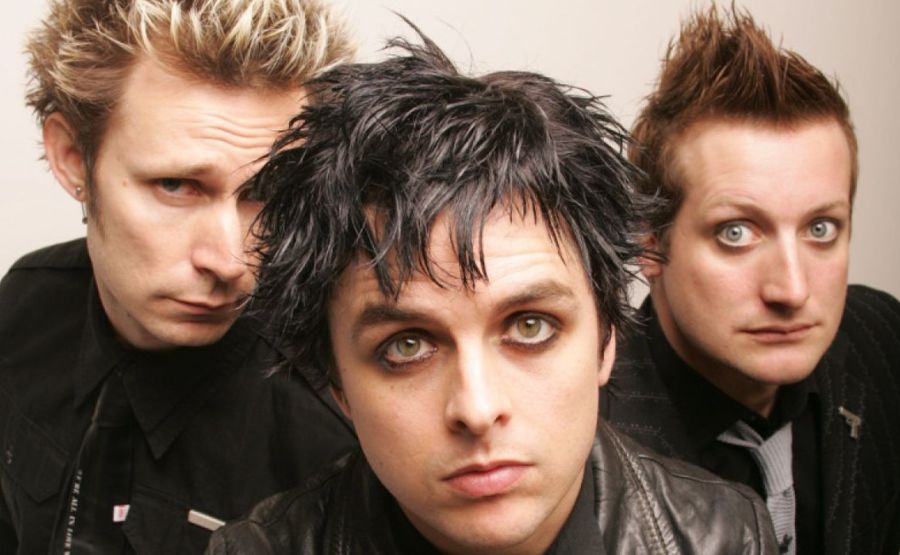
Few bands in the history of popular music have managed to reinvent themselves across three distinct cultural eras without losing either their artistic credibility or their original audience — and Green Day has done it twice.
Quick Facts:
| Formation | 1987, Rodeo, California (as Sweet Children) |
| Current Name Adopted | 1989 |
| Members | Billie Joe Armstrong (b. February 17, 1972) — vocals, guitar |
| Mike Dirnt / Michael Pritchard (b. May 4, 1972) — bass, backing vocals | |
| Tré Cool / Frank Edwin Wright III (b. December 9, 1972) — drums, backing vocals | |
| Genre | Punk rock, pop-punk, alternative rock |
| Record Labels | Lookout! Records (1989–1994); Reprise Records (1994–present) |
| Studio Albums | 14 (1990–2024), including 39/Smooth, Dookie, American Idiot, Saviors |
| Global Record Sales | Approximately 75 million records worldwide (as of 2024) |
| Grammy Awards | 5 wins from 20 nominations: Best Alternative Album (Dookie), Best Rock Album (American Idiot, 21st Century Breakdown), Record of the Year (“Boulevard of Broken Dreams”), Best Musical Show Album (American Idiot: The Original Broadway Cast Recording) |
| Rock and Roll Hall of Fame | Inducted April 18, 2015 (first year of eligibility), inducted by Fall Out Boy |
| Hollywood Walk of Fame | Star no. 2,810, unveiled May 1, 2025, at 6212 Hollywood Boulevard |
| Broadway | American Idiot musical opened April 20, 2010; nominated for 3 Tony Awards, won 2 |
| Key Relationships | Armstrong married Adrienne Nesser, July 2, 1994; two sons, Joey (b. 1995) and Jakob (b. 1998) |
| First Live Show | October 17, 1987, Rod’s Hickory Pit, Vallejo, California |
| Breakthrough Album | Dookie (February 1994), 20+ million copies sold in the U.S. |
Origins: Two Boys From the Refinery Town
The story of Green Day begins not in the Berkeley coffeehouses or San Francisco clubs that populated punk mythology, but in the decidedly unglamorous town of Rodeo, California — a small industrial community fifteen miles north of Berkeley, defined by oil refineries and working-class economics.
It was there, in a school cafeteria, that ten-year-old Billie Joe Armstrong and Michael Pritchard first crossed paths. Neither boy had a conventional home life. Armstrong’s father, a jazz musician, died when Billie Joe was ten, leaving a grief that would surface decades later in some of the band’s most emotionally resonant songs. Pritchard — who would later adopt the surname Dirnt — was born to a heroin-addicted mother, then raised by adoptive parents who themselves divorced when he was seven. When his adoptive mother moved north at fifteen, Dirnt rented a room in the Armstrong household. Their friendship, sealed by shared dislocation and a mutual devotion to rock music, would become one of the most enduring partnerships in American rock history.
By 1987, the pair had formed a band with drummer Raj Punjabi and bassist Sean Hughes. They called themselves Sweet Children, and they played their first show on October 17, 1987, at Rod’s Hickory Pit in Vallejo — a restaurant where Armstrong’s mother worked as a waitress. Armstrong was fifteen. He had already recorded a novelty single, “Look for Love,” at Berkeley’s Fantasy Studios at age five, encouraged by a music teacher at Pinhole’s Fiat Music Company. Music had been his inheritance long before it became his career.
By 1988, Hughes had departed and Punjabi was replaced by John Kiffmeyer, a veteran of the local punk scene who went by the stage name “Al Sobrante.” Dirnt shifted from guitar to bass. The trio’s chemistry clicked into something more purposeful. That same year, Larry Livermore — founder of Lookout! Records and a founding member of the 924 Gilman Street club — saw them perform and offered them a recording deal. In 1989, just before releasing their debut EP, 1,000 Hours, the band dropped the name Sweet Children at Livermore’s suggestion, to avoid confusion with a local act called Sweet Baby. They renamed themselves Green Day, reportedly after their shared affection for marijuana.
The Gilman Street Education: Punk as Ethics, Not Just Sound
To understand Green Day’s roots, one must understand 924 Gilman Street. Opened in December 1986 by a loose collective of musicians and organizers — including longtime punk journalist Tim Yohannan — the Berkeley warehouse functioned as a volunteer-run, all-ages space committed to a code of values: no alcohol, no drugs, no racism, no sexism, no major-label bands. It was equal parts concert venue, community center, and ideological training ground.
Gilman did not merely host early Green Day shows; it shaped the band’s understanding of punk as a framework of principles rather than a set of sonic conventions. The club encouraged teenagers to book their own shows, design their own flyers, and manage their own careers. Within months of the club’s opening, as one founding member later recalled, new bands were emerging “like mushrooms after the rain.” Green Day absorbed that ethos. They would carry it with them even after the world they left behind condemned them for leaving.
In 1990, Kiffmeyer departed to attend Humboldt State University, graciously vacating his seat. Tré Cool — born Frank Edwin Wright III in Germany on December 9, 1972, and raised in a rural Northern California commune before joining the punk band the Lookouts — stepped in on drums. The lineup that would define the band’s entire subsequent career was now fixed. They released their debut album, 39/Smooth, on Lookout! Records in early 1990. Their second album, Kerplunk (1991), sold over 50,000 copies — astronomical numbers for an independent punk release — and attracted the attention of major record labels.
The decision to leave Lookout! and sign with Reprise Records in 1993 fractured their relationship with the Gilman community. Fans who had embraced the band as genuine expressions of DIY punk ethics felt betrayed. Some members of the 924 Gilman collective banned the band from ever playing the venue again. The accusation of “selling out” would follow them for years — a charge that, in retrospect, says more about the contradictions embedded in punk ideology than about the moral character of three working-class kids from Rodeo trying to sustain a band.
Dookie and the Mainstreaming of Punk: 1994 and Its Discontents
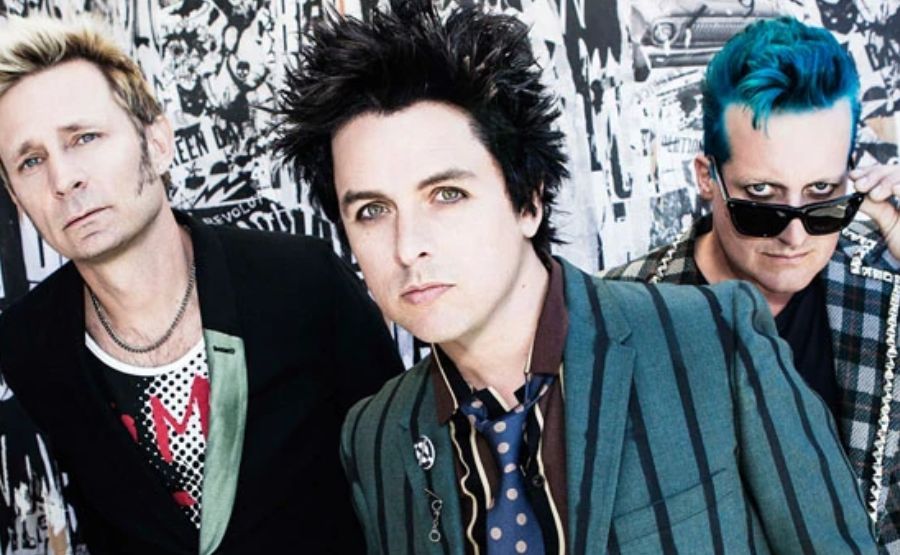
Released in February 1994, Dookie was recorded in roughly three weeks with producer Rob Cavallo and distributed by Reprise Records. It became one of the most commercially successful debut major-label releases in the history of rock music. Fueled by relentless MTV rotation for “Longview,” “Basket Case,” and “When I Come Around,” the album eventually sold over 20 million copies in the United States alone. It won the Grammy Award for Best Alternative Album in 1995.
Dookie succeeded, paradoxically, because it was unapologetically specific. Its songs catalogued boredom, anxiety, masturbation, suburban listlessness, and adolescent alienation with an energy that felt simultaneously private and universal. “Basket Case,” Armstrong later acknowledged, grew directly from his personal panic attacks — a song about mental health written before mental health was common currency in rock discourse. The album’s humor masked real pain. Its speed and hooks masked genuine craft.
The cultural timing was also exact. Dookie arrived as Generation X fatigue with the introspective gravity of grunge was reaching its peak. Green Day offered speed, humor, and a three-minute emotional punch. They were, as one cultural critic noted, the antidote to flannel. Alongside contemporaries like the Offspring and Rancid — bands who also emerged from the Gilman orbit — they reignited mainstream interest in punk rock for the first time since the early 1980s. Rolling Stone would later name Dookie the best alternative album of 1994. Diffuser.fm declared it the greatest album of the 1990s. Fuse cited it as the most important pop-punk album of all time.
But success extracted its own price. The band’s subsequent albums — Insomniac (1995) and Nimrod (1997) — were critically respectable and commercially solid, each reaching double-platinum status. Warning (2000), a more acoustic, folk-inflected album, achieved gold certification but puzzled a fanbase that expected something rawer. By the early 2000s, the conventional narrative had Green Day plateauing — a band that had defined a moment and now found itself past it.
That narrative was spectacularly wrong.
American Idiot: The Protest Album America Needed and Didn’t Expect
The tipping point came in the summer of 2004. The United States was eighteen months into the Iraq War. The Abu Ghraib torture revelations had emerged that spring. President George W. Bush was facing a re-election campaign whose legitimacy was still shadowed by the contested 2000 election. For artists on the left, the moment demanded a response — and most of them flinched.
Green Day did not flinch.
American Idiot, released on September 21, 2004, was not merely a return to form. It was a wholesale transformation. The album functioned as a rock opera — a genre-bending, nine-track-suite-containing narrative following a fictional protagonist, “Jesus of Suburbia,” through suburban alienation, media-saturated paranoia, and the nihilism of the post-9/11 American moment. Armstrong wrote much of the album alone in a rented loft in New York’s East Village, taking long walks through the streets and translating what he witnessed and felt into music with a new compositional ambition.
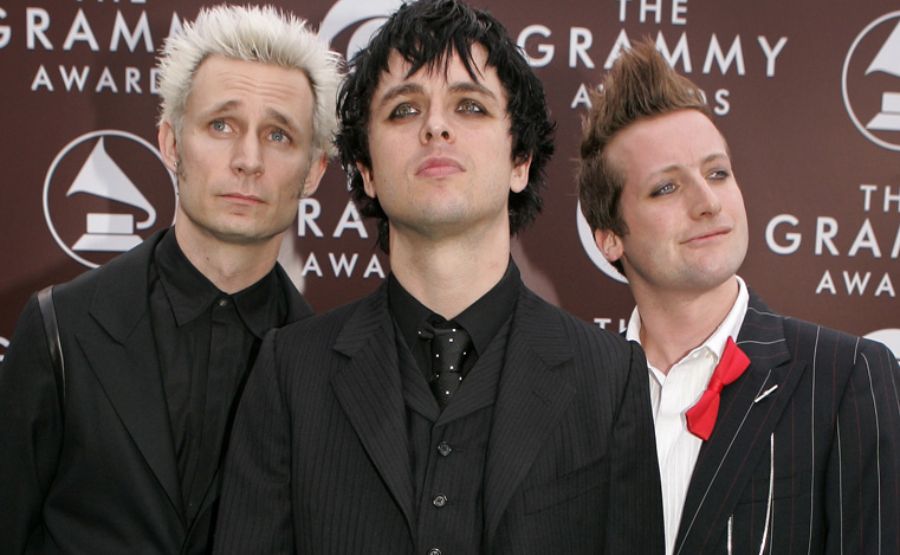
The album debuted at number one in nineteen countries. It won the Grammy Award for Best Rock Album. It sold more than 23 million copies worldwide, making it one of the best-selling albums in history and the most commercially successful protest record of the Iraq War era. The title track — a howling indictment of media manipulation, political paranoia, and nationalist stupidity — reached number three on the UK Singles Chart. “Boulevard of Broken Dreams” won Record of the Year at the 2005 Grammys.
Armstrong later stated that American Idiot was not written specifically about George W. Bush, but about the broader confusion and misrepresentation he felt as an American. “I felt so misrepresented,” he said in a 2010 interview at the 92nd Street Y. “This is not the country I live in. This is not my America.” The album belonged to a wider cultural mobilization: Fat Mike of NOFX had launched Rock Against Bush, a coalition of punk bands releasing compilation albums and funding anti-war tours ahead of the 2004 election. When Green Day performed the title track on CBS’s The Late Show with David Letterman that September, their other guest that same evening was Democratic presidential candidate John Kerry.
Bush won re-election in November 2004. The Punk Voter movement fell short. But five million more young people voted in 2004 than in 2000, and American Idiot was, by any reasonable measure, the defining protest album of the decade. In 2009, working with Tony Award-winning director Michael Mayer, Green Day adapted it into a stage musical that premiered at the Berkeley Repertory Theatre on September 15, 2009 — fittingly, in the city where their story began. It transferred to Broadway on April 20, 2010, earned a Tony nomination for Best Musical, and won Best Scenic Design and Best Lighting Design.
The Fall and the Return: Crisis, Reinvention, and the Trilogy Years
Green Day’s follow-up to American Idiot, the sprawling concept album 21st Century Breakdown (2009), was ambitious and uneven. It reached the band’s best chart position and won another Grammy for Best Rock Album, but critics and fans found it less cohesive than its predecessor. Then, in 2012, the band released three full studio albums simultaneously — ¡Uno!, ¡Dos!, and ¡Tré! — a project that, in retrospect, produced more quantity than quality. The albums were commercially and critically underwhelming, and they arrived against a backdrop of personal catastrophe.
On September 21, 2012, during a performance at the iHeartRadio Music Festival in Las Vegas, Armstrong stopped a rendition of “Basket Case” midway through and delivered an expletive-filled rant, believing the band’s performance time had been cut short. He smashed his guitar and stormed off stage. The band later apologized and clarified that their set had not actually been shortened. Two days later, Green Day announced that Armstrong was entering treatment for substance abuse. The band canceled all remaining tour dates for 2012 and into early 2013.
Armstrong later described the substances involved as alcohol and prescription pills prescribed for anxiety and insomnia. Speaking to Rolling Stone in early 2013, he was direct about the wreckage: he would wake up on strangers’ couches, unable to remember the previous night. The morning after Las Vegas, he asked his wife Adrienne how bad it was. Her answer was: “It’s bad.” He was on a plane to Oakland and into rehabilitation within days. Their friendship — Armstrong’s and Dirnt’s, spanning three decades — showed its resilience during this period. Dirnt wrote Armstrong letters during rehab. They later ran into each other unexpectedly over coffee in Oakland. “Billie apologized to me from the bottom of his heart,” Dirnt told Rolling Stone. “It was just two old friends on a park bench.”
Armstrong emerged from that period sober, clearer, and — in the band’s own accounting — more present. Revolution Radio (2016) returned Green Day to recognizable form. Their 2024 album, Saviors, debuted at number one on seven Billboard charts simultaneously and earned The New Yorker‘s summary assessment: “It’s Green Day’s world now.” The single “The American Dream Is Killing Me” reached number one on Billboard’s Rock & Alternative Airplay chart. The Saviors Tour became the largest concert run of their career.
Personal Life: Family, Friendship, and the Weight of Early Grief
The emotional core of Green Day’s music has always been personal, even when dressed in the clothes of political theater. Armstrong has spoken throughout his career about the death of his father — a jazz musician who died when Billie Joe was ten — as the foundational wound of his inner life. “Wake Me Up When September Ends,” one of American Idiot‘s most affecting tracks, was his private elegy for that loss, widely misread as a commentary on the September 11 attacks.
Armstrong met Adrienne Nesser at a Green Day show in Minneapolis in 1990. They married on July 2, 1994 — and Adrienne discovered she was pregnant the day after the ceremony. Their first son, Joseph Marciano Armstrong, was born on February 28, 1995. Their second, Jakob Danger Armstrong, arrived on September 12, 1998. Both sons have pursued music. Armstrong described his decision to marry quickly and impulsively in a 2014 Rolling Stone interview: “I was very impulsive at that time. I think that impulsive behavior was meant to counteract the chaos in my life.” The marriage, now in its fourth decade, has survived the pressures of fame, addiction, and global scrutiny.
Dirnt’s early life was its own difficult story. Born to a heroin-addicted biological mother, adopted, then left to navigate a second family’s dissolution, he has spoken about how the friendship with Armstrong — and the shared project of music — provided the structural anchor his childhood lacked. Tré Cool, raised in a rural commune and immersed in music from childhood, brought a technical percussion gift and a natural comedic sensibility that balanced the band’s tendency toward earnestness.
The trio’s friendship, not merely their musical partnership, is the biographical fact that most clearly explains their longevity. Most bands of similar vintage fractured under the pressures that Green Day absorbed and endured. The accountability they maintained to each other — visible in Dirnt’s letters to Armstrong during rehab, in the park bench encounter afterward, in decades of sustained collaboration — represents something harder to replicate than musical talent.
Legacy and Lasting Influence: Punk’s Permanent Institution
Green Day’s influence on popular music is measurable in at least three distinct registers. The first is commercial and demographic: their 75 million records sold made them one of the best-selling bands in history, and Dookie is credited by multiple critical bodies as the album most responsible for bringing punk rock to a mass American audience in the 1990s. Bands from Blink-182 and Sum 41 to Fall Out Boy — who inducted Green Day into the Rock and Roll Hall of Fame in April 2015 — built their entire careers on the sonic and commercial template that Dookie established.
The second register is political and cultural. American Idiot proved that punk could be a vehicle for serious protest art without sacrificing accessibility or commercial viability. It expanded the genre’s ambition. It demonstrated that a band born in a volunteer-run Berkeley warehouse could write a rock opera that addressed the moral failures of a presidential administration and reach twenty-three million listeners. The album’s elasticity as a protest text has only grown: in 2016, Armstrong held a Trump mask daubed “IDIOT” onstage. At Dick Clark’s New Year’s Rockin’ Eve in January 2024, he replaced a lyric with “I’m not part of the MAGA agenda.” In July 2024, days after an assassination attempt on Donald Trump, he held the same mask again during a concert. American Idiot has become a durable vessel for American political anger — applicable to contexts its writers could not have anticipated.
The third register is institutional. Inducted into the Rock and Roll Hall of Fame in their first year of eligibility in 2015 — alongside Lou Reed, Joan Jett, and Stevie Ray Vaughan — Green Day received the 2,810th star on the Hollywood Walk of Fame on May 1, 2025, outside Amoeba Music on Hollywood Boulevard. Serena Williams and Ryan Reynolds spoke at the ceremony. The same year, they headlined two consecutive Saturday nights at the Coachella Valley Music and Arts Festival, performing before more than 200,000 people. Their Saviors Tour in 2024 became the biggest concert run of their career — three men, now in their early fifties, filling stadiums on the strength of songs that began as three-chord sketches played in East Bay garages.
The Rock and Roll Hall of Fame noted, in their institutional assessment of the band, that Green Day came to view punk not as a set of sonic rules but as a framework of values — independence, directness, willingness to risk irrelevance in the pursuit of something honest. The club that banned them in the early 1990s never invited them back. But the 924 Gilman Street ethos — the conviction that art should answer to something beyond commercial calculation — remained their most durable inheritance.
Final Reflections:
Green Day’s story resists simple conclusions. They are, simultaneously, the band that was banned from the club that made them and the band that made punk safe for stadium rock. They are the group that declared in 1994 that teenage boredom and suburban alienation deserved three minutes of fast, furious attention — and the group that, a decade later, stretched that impulse into a nine-minute suite capable of expressing a generation’s political anguish.
Their contradictions are real and productive. Armstrong preaches anti-commercial independence while selling out global arenas. He positions himself as a voice for the politically marginalized while maintaining a net worth that places him among rock’s financial elite. He has been criticized for altering protest lyrics in ways that some view as performative and others as brave. These tensions are not bugs in Green Day’s story; they are its features. The band exists at the intersection of commerce and dissent, accessibility and authenticity, mass appeal and punk purity — and they have never resolved that tension cleanly, because it cannot be cleanly resolved.
What distinguishes them from most bands that began in the same scene and time is not talent alone, though that was essential. It is the willingness to risk failure — to make Warning‘s acoustic left turn, to attempt the rock opera of American Idiot, to emerge from the wreckage of the 2012 ¡Uno!/¡Dos!/¡Tré! era and still release a chart-topping album a decade later. It is the friendship between three men who met as teenagers in a California refinery town and chose, through every upheaval, to remain committed to the project they began together.
Armstrong said it plainly to Variety in 2025: “You have to live life to write songs about your life.” Green Day has lived enough life — joy, grief, addiction, recovery, commercial triumph, critical dismissal, political fury, and improbable reinvention — to fill the songs they have been writing for nearly four decades. The world they diagnose, in album after album, keeps supplying them with material.
That, more than any award or chart position, is the measure of their lasting significance.
FAQs
1. When and where did Green Day form?
Green Day formed in 1987 in Rodeo, California, initially as a band called Sweet Children. At the age of fifteen, Mike Dirnt and Billie Joe Armstrong co-founded the band.. They adopted the name Green Day in 1989 before releasing their debut EP on Lookout! Records.
2. Who are the current members of Green Day?
Green Day is a power trio consisting of Billie Joe Armstrong (lead vocals, guitar), Mike Dirnt (bass, backing vocals), and Tré Cool (drums, backing vocals). John Kiffmeyer, the original drummer, was replaced by Tré Cool in late 1990.
3. What was 924 Gilman Street and why does it matter to the band’s story?
924 Gilman Street is a volunteer-run, all-ages punk venue in Berkeley, California, that opened in December 1986. It was the incubator for the East Bay punk scene and the venue where Green Day honed their craft as teenagers. When the band signed to major-label Reprise Records in 1993, the Gilman community effectively banned them for “selling out” — a rupture that illuminates the ideological tensions punk has always carried about commercial success.
4. What was the significance of Dookie (1994)?
Dookie was Green Day’s major-label debut and became one of the most commercially successful punk albums ever recorded, eventually selling over 20 million copies in the United States. It won the Grammy for Best Alternative Album in 1995 and is widely credited with bringing punk rock to a mass mainstream audience in the 1990s.
5. What inspired American Idiot (2004)?
The album arose from Armstrong’s deep disillusionment with post-9/11 American culture, the Iraq War, and the media’s role in propagating fear and political conformity. Armstrong wrote much of it alone in a rented East Village loft in New York City. Released September 21, 2004, it reached number one in nineteen countries and became the defining protest album of the decade.
6. Is American Idiot explicitly about President George W. Bush?
Armstrong consistently stated that the album was about the broader confusion and misrepresentation of American culture rather than about Bush personally. The political subtext was evident to most listeners, however, and Armstrong confirmed the anti-war and anti-media thrust of the album in numerous interviews. He later adapted some lyrics specifically targeting Donald Trump in live performances.
7. What happened at the 2012 iHeartRadio Music Festival?
During a performance in Las Vegas on September 21, 2012, Armstrong halted a rendition of “Basket Case” and delivered an expletive-laced rant, believing his band’s set time had been cut short. He left the stage after smashing his instrument. Two days later, Green Day announced he was entering substance abuse treatment. Armstrong later disclosed that he had been abusing alcohol and prescription pills for anxiety and insomnia.
8. How did Armstrong achieve and maintain sobriety?
Armstrong entered rehabilitation in late September 2012 and completed a stint there by late October. He has described the recovery process as gradual and socially sustained — surrounding himself with friends and family who do not drink. He experienced a relapse before eventually returning to sobriety, which he discussed directly in the 2024 single “Dilemma.” He told Howard Stern in January 2024 that he had been He remained sober for five years until experiencing a severe relapse that left him “felt physically and mentally drained.”
9. When were Green Day inducted into the Rock and Roll Hall of Fame?
Green Day were inducted on April 18, 2015, their first year of eligibility. Fall Out Boy’s Patrick Stump and Pete Wentz delivered the induction speech, praising the trio for redefining punk on their own terms.
10. What is the American Idiot Broadway musical?
Developed with director Michael Mayer, the stage adaptation of American Idiot premiered at the Berkeley Repertory Theatre on September 15, 2009, and moved to Broadway on April 20, 2010. The musical was nominated for three Tony Awards and won Best Scenic Design and Best Lighting Design. The cast recording also earned a Grammy for Best Musical Show Album.
11. How many records has Green Day sold worldwide?
As of 2024, Green Day has sold approximately 75 million records worldwide, making them one of the best-selling bands in history. Dookie alone has sold over 20 million copies in the United States.
12. What is the band’s most recent work?
Green Day released their fourteenth studio album, Saviors, on January 19, 2024. It debuted at number one on seven Billboard charts and earned extensive critical praise. The single “The American Dream Is Killing Me” reached number one on Billboard’s Rock & Alternative Airplay chart. The subsequent Saviors Tour in 2024 was the largest concert run of the band’s career.
13. What is Green Day’s Hollywood Walk of Fame star?
The band received the 2,810th star on the Hollywood Walk of Fame on May 1, 2025, at 6212 Hollywood Boulevard — outside Amoeba Music in Hollywood. The ceremony was attended by Serena Williams and Ryan Reynolds, who spoke about the band’s cultural impact.
14. What side projects have the members pursued?
Armstrong has participated in Pinhead Gunpowder, the Foxboro Hot Tubs, the Network, the Longshot, and the Coverups. He has acted in films including Ordinary World (2016) and Like Sunday, Like Rain (2014). Dirnt is a co-owner of a family diner in Emeryville, California. The band collectively co-founded Oakland Coffee Works, launched in 2015 as a sustainable, eco-conscious coffee company.
15. What is Green Day’s relationship to punk ideology after decades of mainstream success?
It remains complicated and productive. The band has consistently maintained that they understand punk as a value system — of independence, directness, and refusal to be silenced — rather than as a set of sonic or commercial restrictions. Critics from the DIY scene have never fully forgiven them for signing with a major label in 1993. The band has never fully apologized for doing so. Both positions contain something true about the impossible demands punk places on the artists it creates.
Read smarter, discover deeper with dailytheory.